A 2026 update of the old working-diver guide first published online in 2001.
Deep Sea Archives · Updated 2026
So... You Want to Be a Commercial Diver?
2026 edition · based on the historic April 2001 article · illustrated with CaptNemo archive photographs
Commercial diving schools, training, certification, pay, debt, offshore and inland work—and what has changed since the old N.A.O.C.D. advice first circulated on the web.
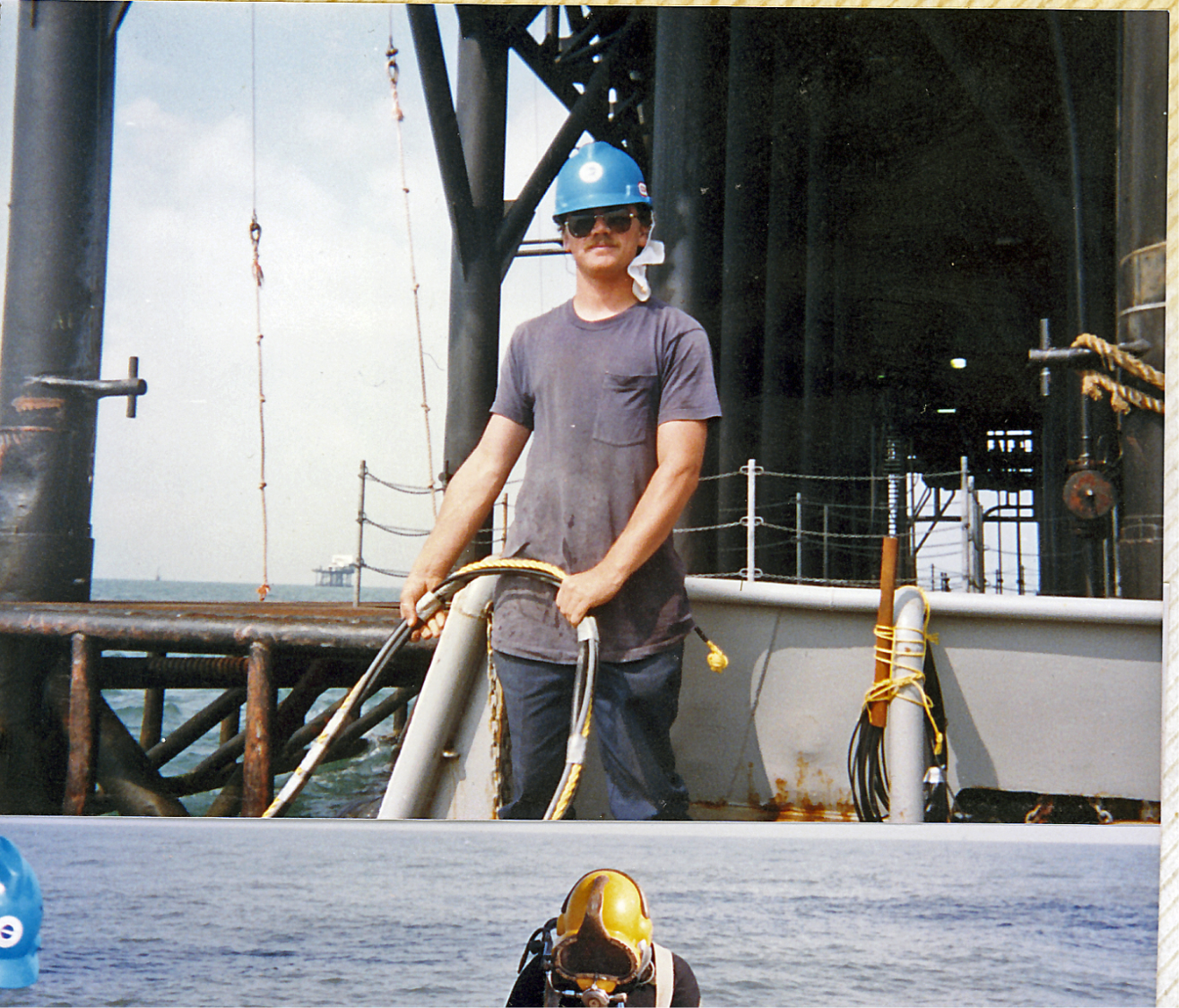
Offshore commercial diving in the Gulf of Mexico — CaptNemo archive.
The prices are obsolete. Some schools are gone. The certification system has changed. But the old article's central warning has aged remarkably well: know what you're buying, and don't confuse graduating from dive school with becoming an experienced working diver.— 2026 update to “So... You Want to be a Commercial Diver?”
The 2026 bottom line
Commercial diving is still a real trade. There is still dangerous work. There is still fascinating work. There are still jobs that very few people will ever experience. There is still good money to be made by people who become useful, experienced and qualified.
And there are still schools selling the dream to students who have not yet learned the difference between becoming a trained entry-level diver and becoming an experienced commercial diver.
The 2001 article understood that distinction. Twenty-five years later, that is the part worth preserving.
Go to a legitimate school. Get the certification you actually need. Spend as little as reasonably possible unless the extra money buys a qualification or training you can clearly justify. Learn a trade. Pass the physical. Expect to start at the bottom. Listen more than you talk. Learn from the old hands.
And do not borrow forty thousand dollars because somebody showed you a photograph of an underwater welder.
The helmet gets you underwater. Being useful is what keeps you employed.
More than twenty-five years ago, a web page titled “So... You Want to be a Commercial Diver?” circulated among people looking at commercial diving as a career. The surviving page is marked Revised April 2001. cDiver later preserved the material and credited it as being used with permission from the former National Association of Commercial Divers (N.A.O.C.D.).
cDiver described the old information as dated but still useful. They were right. The pay figures belong to another era, several schools have disappeared, and some statements about age and hiring need to be retired. But the original's skepticism about school advertising, debt and what a rookie actually knows on graduation remains remarkably current.
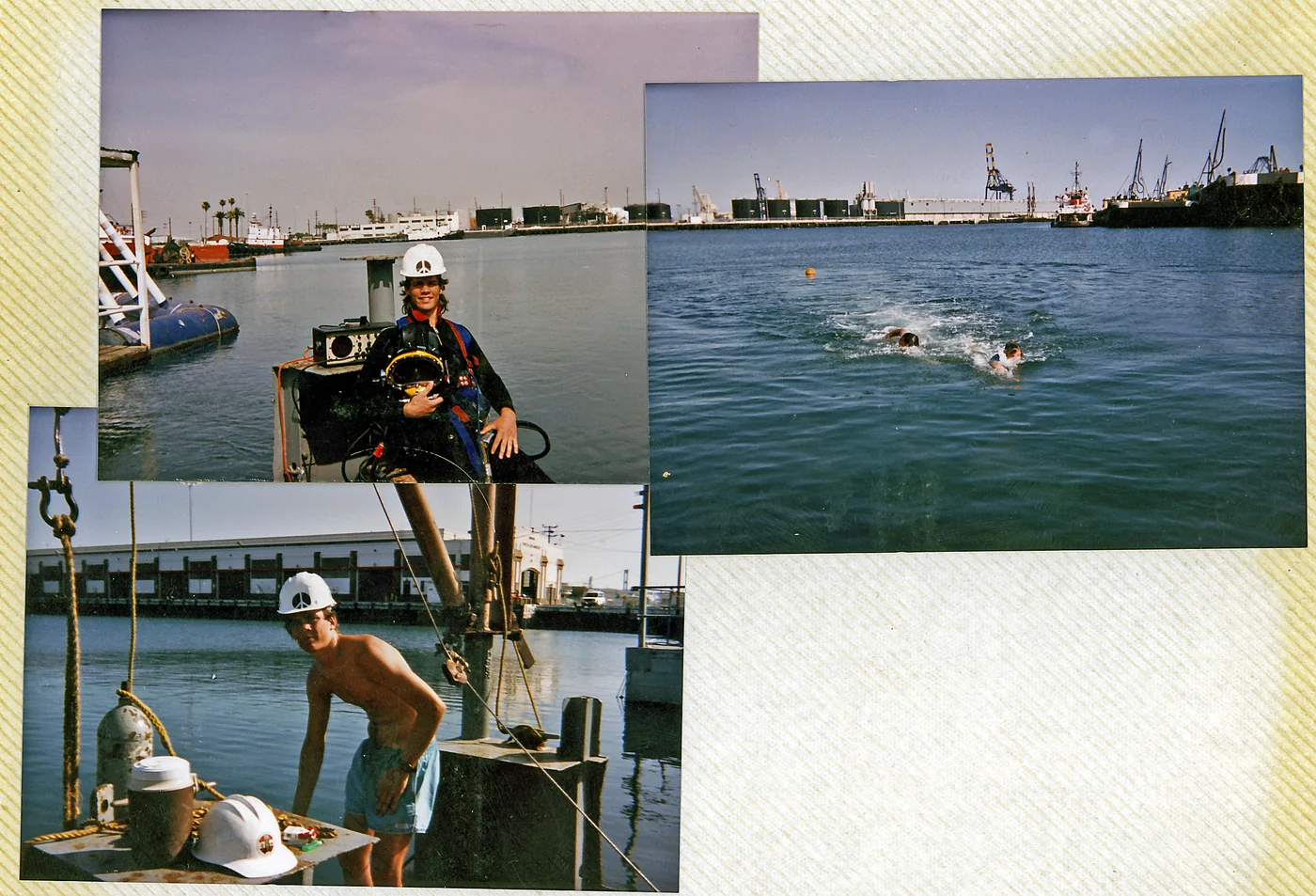
Archive photographs: this edition also uses material from the College of Oceaneering, Wilmington, California (1991) and Louisiana offshore (1992) photo sets, together with commercial-diving images already in the CaptNemo library.
First, understand what the job actually is
A commercial diver is not primarily a recreational diver who gets paid. He or she is a working tradesperson whose job happens to be underwater.
Commercial divers inspect, repair, remove and install structures and equipment underwater using drills, hammers, torches, welding equipment and other tools. They work in marine construction, bridge and dam inspection, ship husbandry, salvage, power plants, municipal water systems, contaminated water, pipeline work, offshore oil and gas, NDT and inspection.
And occasionally, yes, underwater welding.
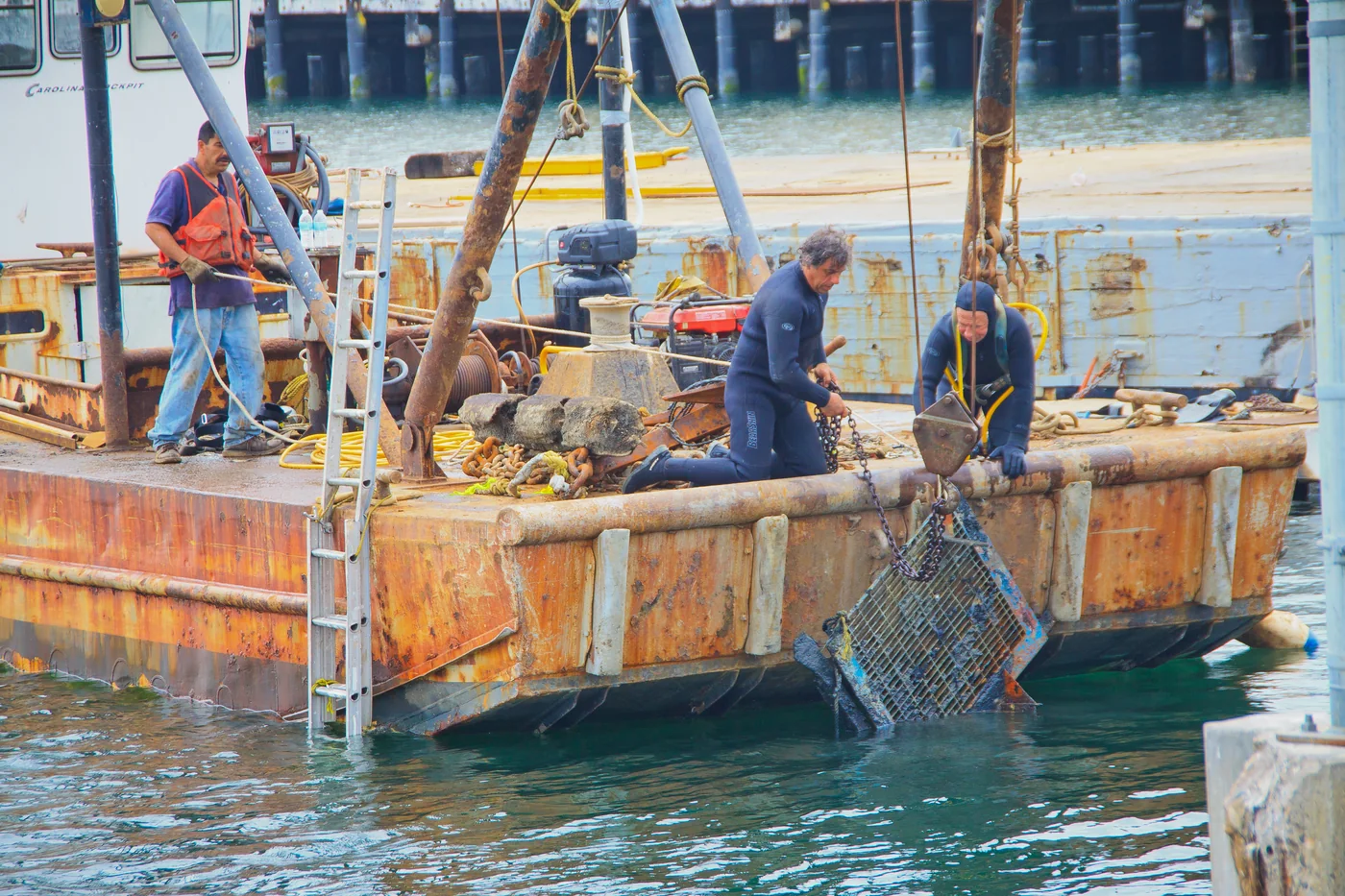
Surface work is part of the job too: rigging, tending and equipment handling on a waterfront dive operation.
The old advice still holds: knowing how to dive does not give you much to do once you reach the bottom. Knowing how to weld, burn, rig, inspect, wrench, troubleshoot hydraulics, understand construction and solve mechanical problems does.
An experienced welder, rigger, mechanic or construction worker who learns commercial diving can be more useful to a contractor than someone whose principal qualification is that he loves scuba diving.
Offshore or inland?
Offshore
For generations of American divers, “going offshore” meant heading to the Gulf of Mexico and entering the traditional tender-diver system. You graduate from school. You do not graduate as an experienced working diver. You start at the bottom.
You tend. You learn the company's equipment, deck operations, chambers, compressors, hats, hoses and procedures. You learn how a professional crew operates when nobody is standing beside you with a grade book. Eventually you get dives. Eventually, if you're competent and the company needs divers, you break out.
Graduation is the beginning of your apprenticeship, not the end of it.
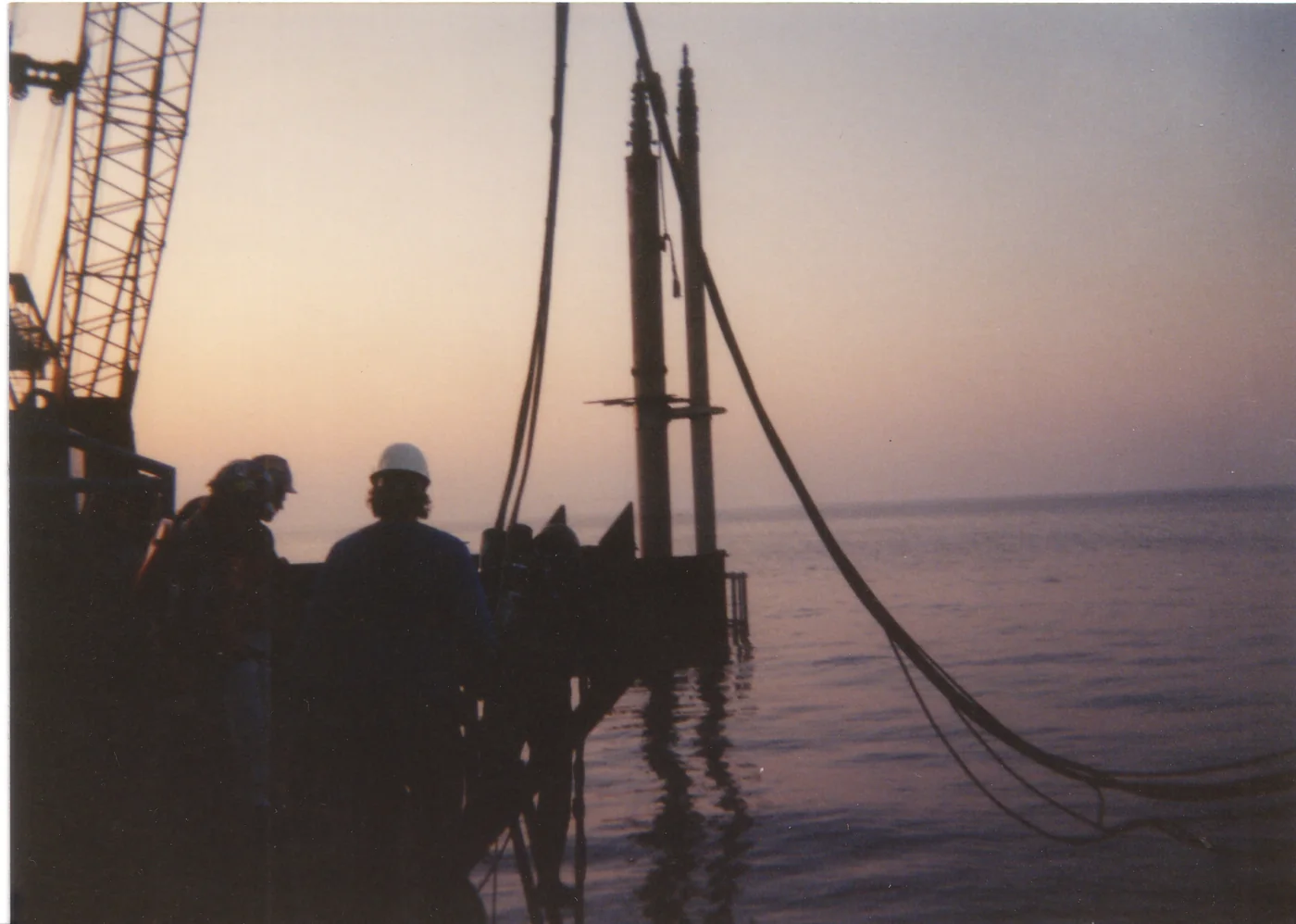
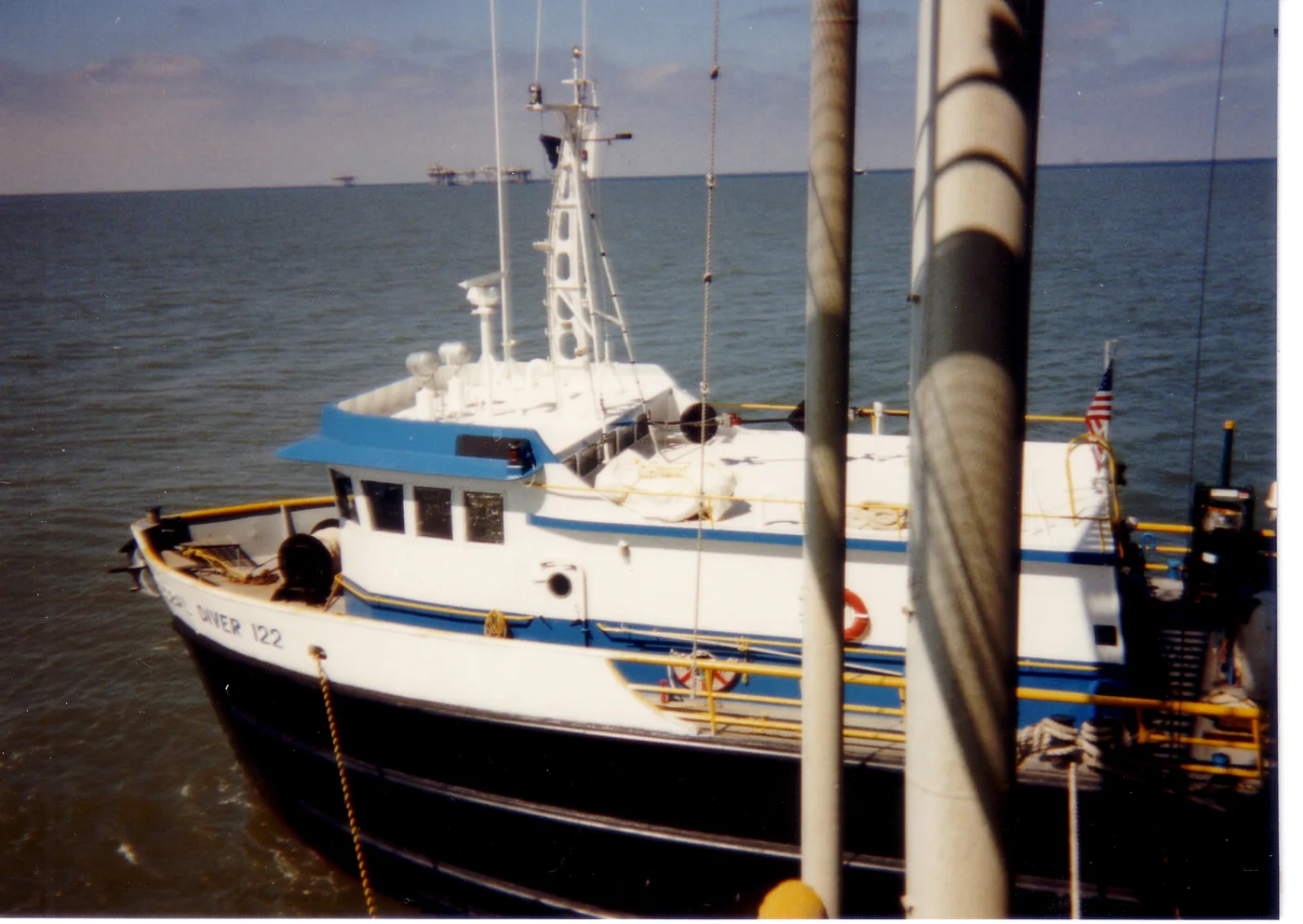
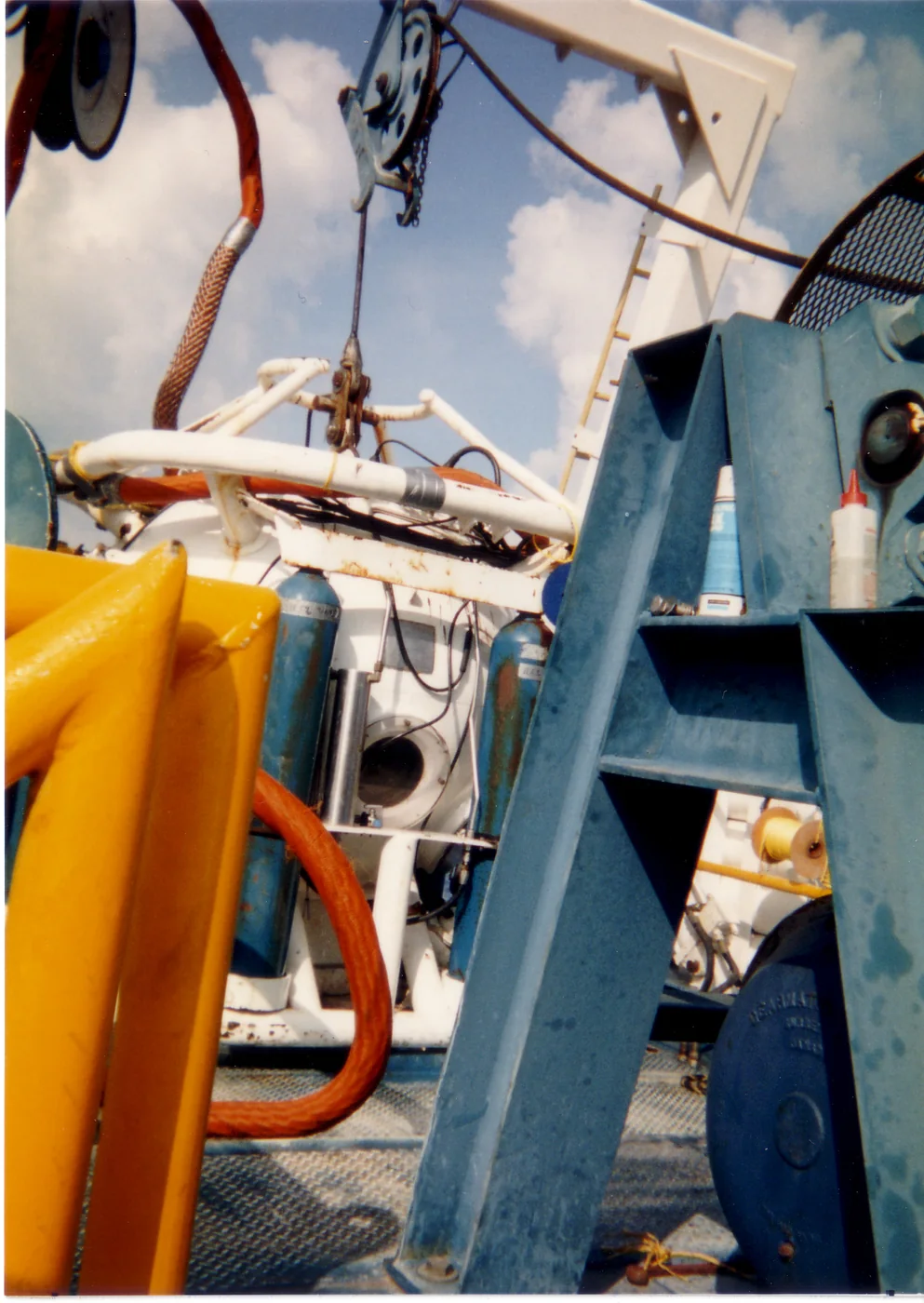
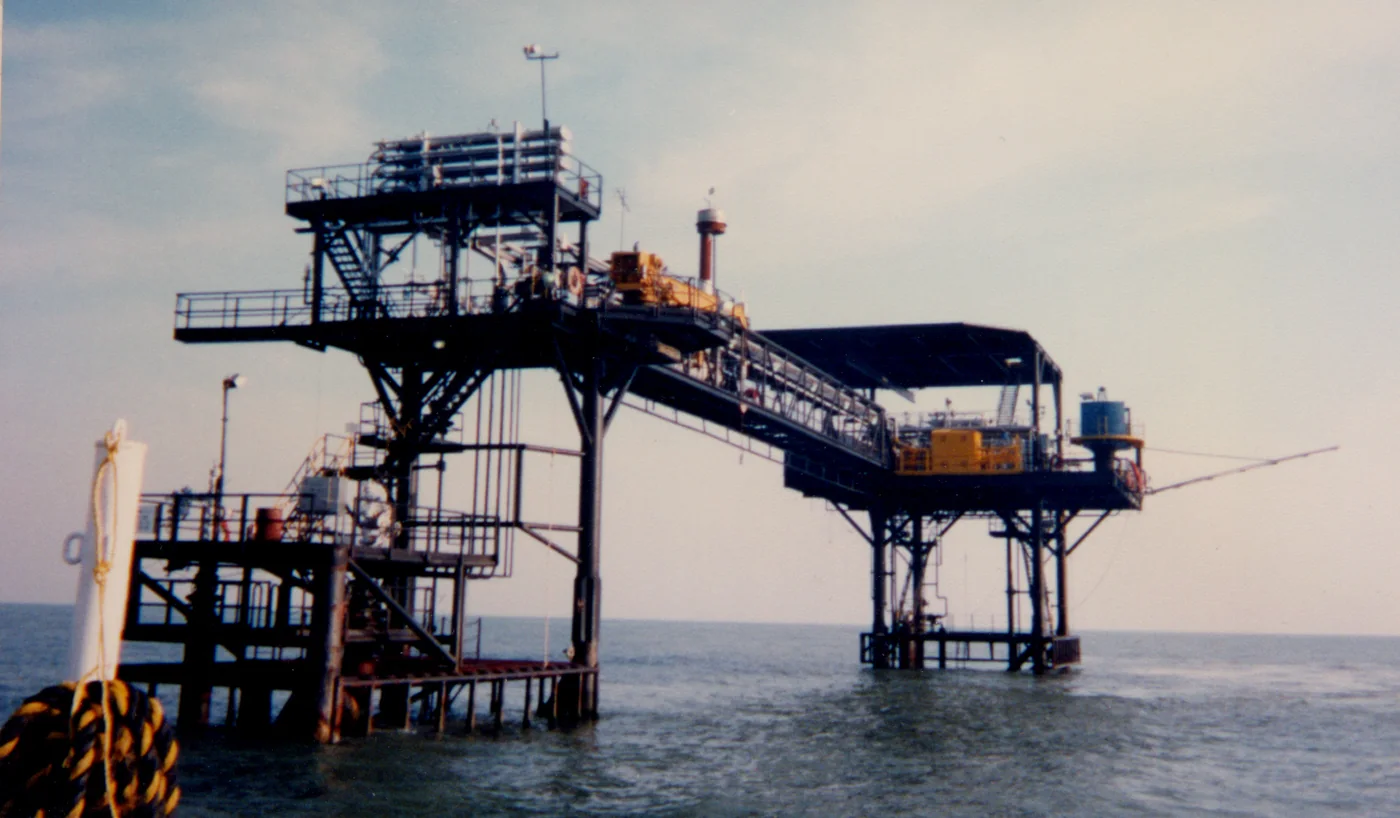
Louisiana, 1992: deck crew and diving umbilicals during offshore work.Louisiana, 1992:Global Diver 122, with production platforms visible offshore.Louisiana, 1992: dive bell and deck equipment.Louisiana, 1992: the offshore environment behind the old Gulf-diving career path.
Inland and inshore
Inland work can mean bridges, dams, reservoirs, municipal water systems, power stations, marine construction and ship work. You may get into the water sooner. You may also spend those dives in six inches of visibility, feeling around in mud beside concrete, steel, pilings or an intake that is considerably more interested in water flow than your personal welfare.
The 2001 article suggested looking hard at union construction work. That remains sound advice. Piledriver, carpenter and marine-construction organizations remain legitimate routes into underwater construction.
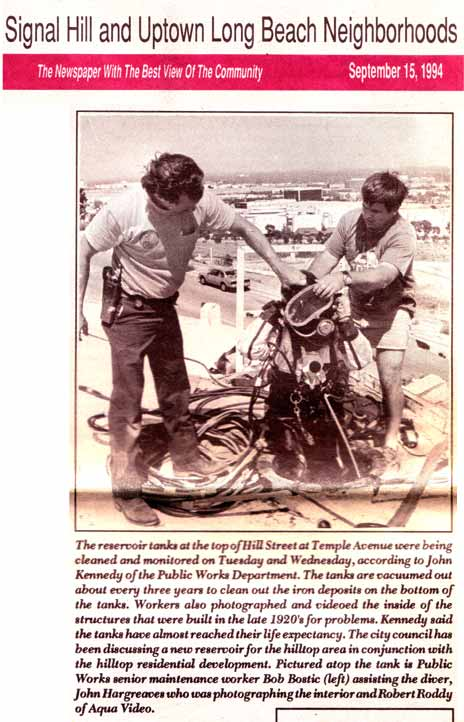
Inland commercial diving: a 1994 Signal Hill and Uptown Long Beach Neighborhoods clipping showing reservoir maintenance work. Click the clipping to watch the related video on YouTube. Open the video.
What happened to the old “Big Five”?
The 2001 article spent considerable time on what were then the major U.S. commercial-diving schools. Twenty-five years later, the list tells a story by itself.
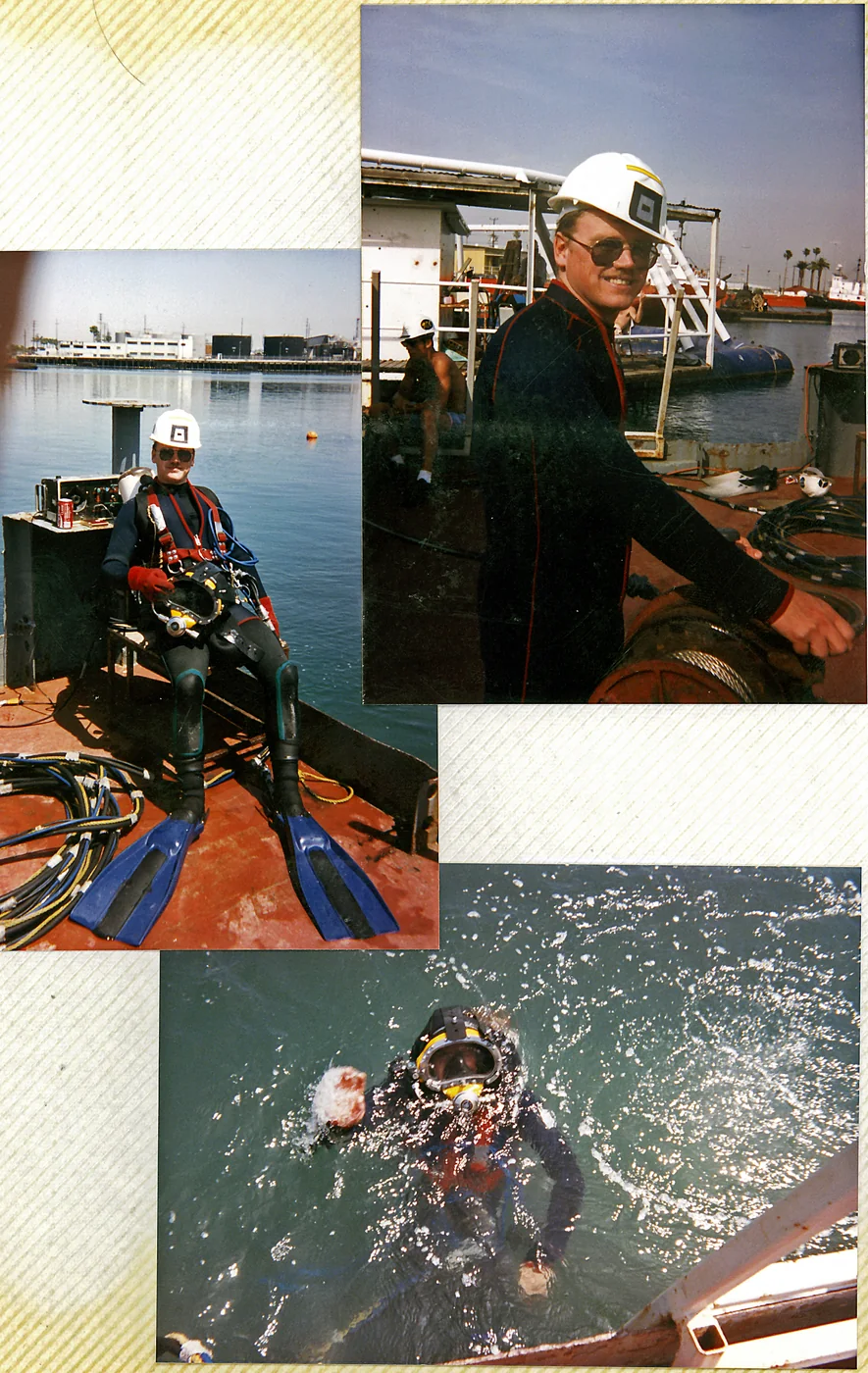
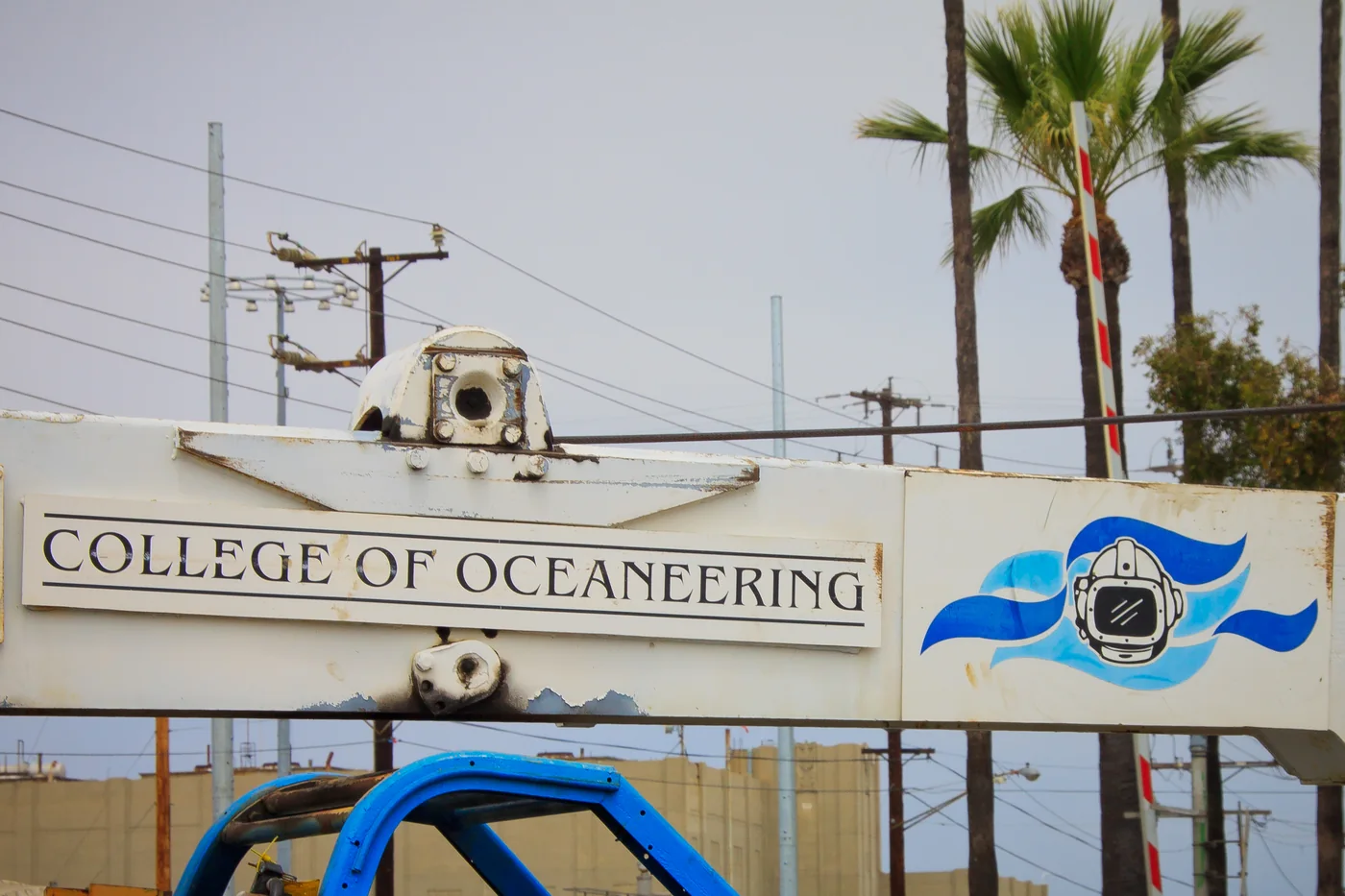
College of Oceaneering, 1991: commercial-diving training at the Wilmington waterfront.College of Oceaneering, 1991: harbor training and dive-school life.A later archive photograph of the College of Oceaneering sign in Wilmington.
School in the 2001 article
2026 status
College of Oceaneering, California
Closed Became National Polytechnic College. The Wilmington school stopped taking new students in 2010; National University remains custodian of records.
Divers Academy of the Eastern Seaboard, New Jersey
Changed / historical Renamed Divers Academy International in 2001. It does not appear on ADCI's current recognized-school directory.
Divers Institute of Technology, Seattle
Current Still operating and ADCI recognized; offers a DCBC unrestricted route.
The Ocean Corporation, Houston
Current Still operating and ADCI recognized.
Santa Barbara City College
Current Marine Diving Technology remains active and ADCI recognized.
Young Memorial, Morgan City
Current Now part of South Louisiana Community College and still one of the strongest value choices.
The most interesting survivor may be the one the old cDiver material praised for giving students the most “bang for the buck”: Young Memorial. In 2026 working divers still recommend Morgan City for essentially the same reason.
How much should you spend on dive school?
In 2001, College of Oceaneering cost roughly $15,950 and was considered expensive. Today that amount can look cheap.
2026 program
Approximate published tuition / program cost
What to notice
Divers Institute of Technology
About $29,000 tuition + roughly $5,850 gear/physical
Strong open-water training and DCBC route, but total cost can approach $50,000 with living expenses.
The Ocean Corporation
About $27,000 tuition
Established Houston school with NDT exposure.
Professional Diver Training Center
About $21,994
Shorter private-school route; small classes are a selling point.
Florida Commercial Diving Institute
About $20,900 national / $28,900 unrestricted
Unrestricted/DCBC-oriented path available.
South Louisiana Community College / Young Memorial
Public-college tuition; roughly low-thousands before program-specific costs
Major cost advantage for U.S./Gulf-bound students.
Santa Barbara City College
California community-college rates for residents
Extremely inexpensive tuition; Santa Barbara housing can erase much of the savings.
Do not compare tuition. Compare total debt. Tuition, equipment, dive physical, housing, food, transportation and months without normal full-time income are all part of what school costs you.
And remember what happens after graduation: you are still a rookie.
What does “accredited” mean?
Do not let somebody wave the word accredited at you without asking who did the accrediting and exactly what it means.
There are at least two separate questions:
Is the school itself an accredited educational institution?
Are your commercial-diving training and resulting credentials accepted by the contractors, certifying organizations and countries where you intend to work?
Those are not the same thing.
For U.S. work, ADCI recognition is an important checkpoint. Its current recognized-school list includes DIT, Florida Commercial Diving Institute, Professional Diver Training Center, Santa Barbara City College, South Louisiana Community College/Young Memorial and The Ocean Corporation, among others.
For international work the picture is different. IMCA maintains a list of diver-training qualifications it recognizes for offshore diving. DCBC in Canada, ADAS in Australia and other national systems may matter depending on where you intend to work.
Beware the phrase “IMCA approved school.” IMCA has specifically warned students about supposed “IMCA-approved” in-water training. Verify the exact qualification a school is authorized to issue, not the wording in an advertisement.
The schools in 2026
Best value for most U.S. students
Young Memorial / South Louisiana Community College — Morgan City, Louisiana
The old cDiver material recommended Young Memorial because expensive private schools could not compete with a state institution on price. That recommendation has aged exceptionally well. The program is now part of South Louisiana Community College, remains ADCI recognized and sits in the middle of the Gulf service industry.
If I were paying my own money and intended to work commercially in the United States—especially the Gulf—this would be the first place I called.
Santa Barbara City College — California
The answer has not changed much since 2001. For a California resident who can solve the housing problem, SBCC is an extraordinary value. The Marine Diving Technology program remains active and ADCI recognized, while California community-college tuition stays far below private-school pricing.
Divers Institute of Technology — Seattle
DIT remains one of the major established schools and offers roughly 900 hours of training with substantial open-water work. Qualifying graduates can pursue ADCI credentials and the DCBC Unrestricted Surface Supplied Air Diver certification.
That international portability can justify the extra money. The downside is simple: it is expensive. If you plan to borrow nearly all of the cost and then go directly to the Gulf to tend beside someone who spent a fraction of that in Morgan City, do the arithmetic first.
The Ocean Corporation — Houston
Ocean Corp has been around since 1969. Its approximately 30-week program combines commercial-diving training with significant NDT exposure. Houston/Gulf industry connections can be useful. But the old question still applies: what are you getting for the extra money that you could not obtain at a public program plus later trade training?
Professional Diver Training Center — Alvarado, Texas
PDTC is one of the newer serious private-school options: a roughly 700-hour course, ADCI recognition, small classes and institutional accreditation through the Council on Occupational Education. It is worth comparing for someone who wants a shorter private program without paying DIT-level total costs.
Florida Commercial Diving Institute — Hudson, Florida
FCDI offers both national and unrestricted surface-supplied tracks and is particularly worth considering if a DCBC-oriented international qualification is important to you.
“Underwater welding”
We should deal with this one because dive schools have been selling underwater welding since before the original article was written.
Yes, commercial divers weld underwater.
No, “underwater welder” usually is not the separate career occupation people imagine when they see the advertisement.
You become a competent commercial diver. You become useful with tools and construction. You develop welding and burning skills. If a job needs wet welding and you are qualified to do it, you weld.
A large amount of underwater work involves inspection, rigging, cutting, burning, bolting, dredging, installing, removing, cleaning and repairing. If a school salesperson spends considerably more time talking about glamorous underwater welding than about tending, rigging, chambers, equipment maintenance and basic construction work, ask harder questions.
How much will I make?
This is one section of the 2001 article that cannot simply be carried forward. The old material cited offshore tender wages around $5.50–$8 an hour, with established divers around $10–$15 an hour before depth and saturation premiums.
BLS estimated about 2,790 commercial-diver jobs nationally in that dataset. Geography makes a tremendous difference: Louisiana's published mean was $26.37 an hour / $54,840 a year, while Washington's was $74.34 an hour / $154,630 a year. Those are occupational averages, not starting offers.
Do not read even the national median as a new graduate's guaranteed salary. Geography, overtime, union status, offshore rotations, depth pay, per diem, specialty qualifications and whether there happens to be enough work all matter. A rookie tender entering the Gulf is in a very different position from an experienced union diver, specialist inspector or saturation diver.
The old warning survives even though the numbers do not: never borrow money based on the highest salary printed in a school advertisement. Ask what recent new graduates actually make.
Am I too old?
The original material said companies would not let divers do deep or saturation work after about age forty. That should not be repeated as a current rule.
There is no general U.S. commercial-diving regulation saying you turn forty and surrender your helmet. Modern commercial-diving medical standards do, however, increase cardiovascular scrutiny as divers get older.
Commercial diving is hard physical work. Entry-level employment also means competing with younger people who may be more willing to travel constantly, live cheaply and abuse their knees for the privilege of becoming divers.
A healthy forty-five-year-old with strong mechanical or construction skills may bring considerably more value to a contractor than a twenty-year-old with no trade skills. A fifty-five-year-old with no commercial experience who expects to start from the bottom offshore faces a steeper hill.
What about women?
The old material bluntly warned that some companies would not hire women. That accurately records an attitude women encountered in parts of the industry, but it should be read today as history, not hiring guidance. Women have built long careers in hard-hat, inland, offshore and saturation diving, even though commercial diving remains heavily male dominated.
A few careers are worth knowing because they put that old warning in perspective:
Hansen began hard-hat diving in 1949. By 1957 she had logged more than 4,000 dives in heavy gear and became the second woman to join California's Piledrivers, Bridge & Dockworkers Union Local 2375. Her roughly 50-year commercial-diving career included pile wrapping, harbor maintenance and inspection, foreman and tender work, and training other divers around the world.
James trained in Scotland in the 1980s and in 1987 became the first British female commercial offshore diver working in the North Sea. She later moved through engineering, project and corporate leadership positions and built a career of more than 30 years in offshore energy; she is now Group Environmental Director at Subsea7.
Zabarsky entered commercial diving in the 1990s and became the first female saturation diver in the Gulf of Mexico. Her career continued well beyond the bell: she moved into project management, business development and HSEQ leadership, and in 2026 serves as HSEQ Manager for Aqueos and vice-chair of IMCA's Diving Committee.
The useful lesson is not that women have an easier path now. Current industry discussions still identify issues such as properly fitting PPE, offshore facilities, and the need to repeatedly prove competence in a traditionally male workforce. The lesson is that there is no legitimate reason to treat being female as a bar to the occupation. The standard is the same one that matters for everyone else: can you do the work safely, competently and reliably?
Get the physical first
Here is one place not to economize. Commercial diving involves hyperbaric exposure, heavy equipment and environments in which becoming incapacitated can kill you and endanger the people trying to recover you.
Before moving across the country, signing a lease and borrowing tuition money, obtain the appropriate commercial-diving medical. Find out whether your body qualifies for the occupation before spending thousands preparing to enter it.
Don't buy a recreational-diving fantasy
Prior scuba experience can help with comfort in the water. It does not make you a commercial diver. Many commercial schools do not require previous scuba experience at all.
The school is not primarily teaching you to look at fish while maintaining excellent buoyancy. It is teaching you surface-supplied gas, communication, tools, decompression procedures, tending, construction hazards and how to function as part of a commercial dive team.
Your scuba card is not useless. Just do not mistake it for an apprenticeship.
The salesman problem hasn't disappeared
The old cDiver material offered one of its bluntest warnings: some dive-school salesmen were dishonest. It even described graduating classes where nobody was still in the industry a year later.
I would not repeat that old attrition claim today as a verified statistic. I would preserve the warning.
Ask a school for actual completion and placement statistics—and then ask what placement means. Does a tender job count? Does any marine-industry job count? Does topside welding count? How long after graduation is employment measured? How many graduates are still working commercially after two or three years?
Saturation diving
Everybody wants to talk about sat because sat divers can make excellent money. That is why sat appears in advertisements.
But a saturation system is not waiting at graduation for the most enthusiastic student in the class. You first have to become a competent commercial diver, then an experienced diver, then build the offshore experience, qualifications and reputation that make somebody willing to put you into a saturation team.
Sat is several career steps away from dive school. Buy your first step accordingly.
International work
This is probably the area where the 2001 article requires the most technical updating.
An American entry-level credential can be perfectly useful for American inland or Gulf employment and still not be the ideal passport to every international offshore market. IMCA recognizes specific qualifications for offshore work, and local national regulations may impose additional requirements.
If your real objective is the North Sea, Australia, Canada, the Middle East or another international market, investigate the certification route for that market before choosing the school. A DCBC unrestricted route may justify a higher price for somebody with that goal. For someone planning to work exclusively in Louisiana, maybe not.
There is no universal “best dive school.” There is a best-value school for the job you are actually trying to get.
If I were a California resident who could keep housing costs under control, I would look extremely hard at Santa Barbara City College.
If international credential portability were a major objective, I would investigate DIT's DCBC route and compare it carefully with FCDI and other internationally recognized programs.
If I specifically wanted a private school, I would compare PDTC, DIT, Ocean Corp and FCDI based on the exact qualification received, training environment, total debt and intended employment market—not advertising.
Before committing, call contractors and ask: “If I graduate from this school with this exact certification, will you hire me?”
Admissions departments sell schools. Contractors hire divers. Ask both.
Before you sign anything
Ask who issues your diver certification.
Verify that certification with ADCI, DCBC, IMCA or the appropriate national authority.
Ask for the complete program cost—not merely tuition.
Ask what required equipment and the dive physical cost.
Ask about housing.
Ask how much actual surface-supplied water time you will receive.
Ask how much training is real open water.
Ask how many students start each class and how many graduate.
Ask how many graduates are working in commercial diving six months later.
Ask how many are still in the industry two years later.
Ask which contractors hired the last graduating class—then call some of those contractors yourself.
If somebody gets irritated because you're asking these questions, you have just learned something valuable without paying tuition.
Commercial diving is a small occupation. There will be slow periods. There will be injuries. There may come a day when the doctor says you are done diving. There may also come a day when you simply decide you would rather sleep in your own bed.
A diver with another trade has options. A person whose only marketable skill is “I can go underwater” has considerably fewer.
Sources & historical reference
This page is a modern update, not a verbatim copy. It preserves the viewpoint and topics of the 2001 article while correcting obsolete school, cost, certification, medical and employment information.
Original material referenced for historical context; current information checked in 2026. School costs and certification arrangements change, so verify them directly before enrolling.